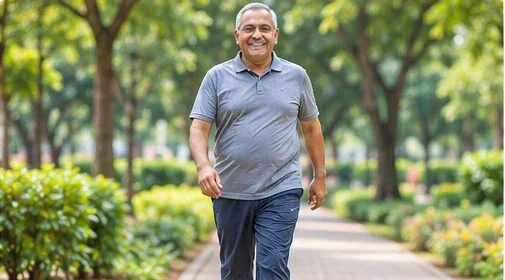
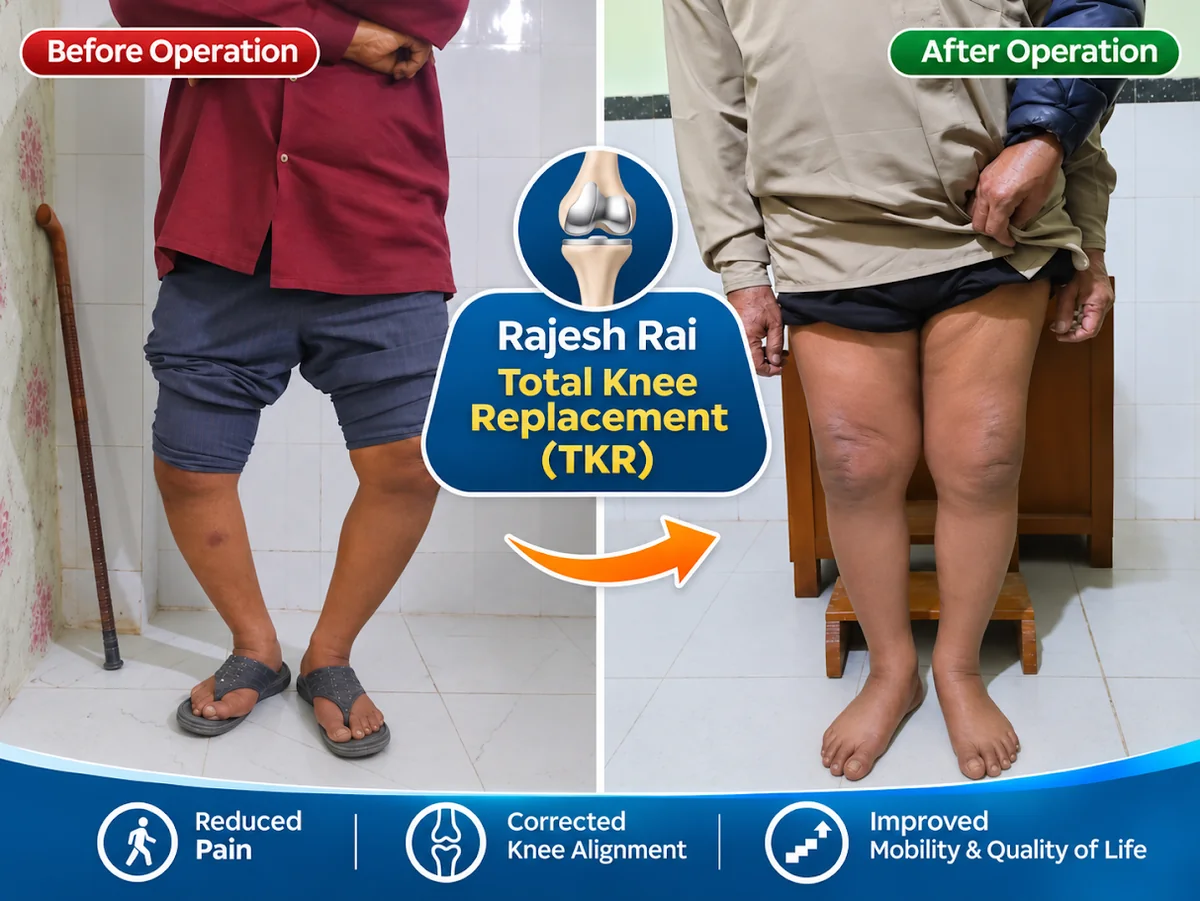
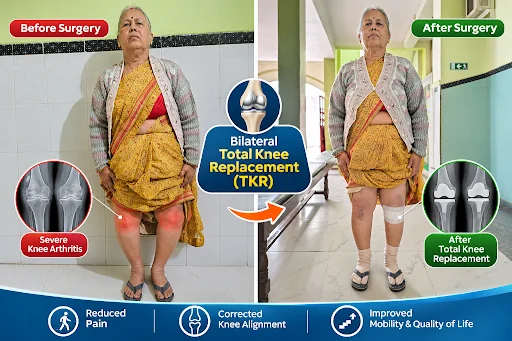
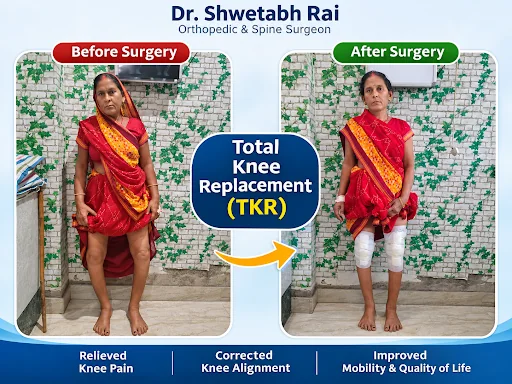
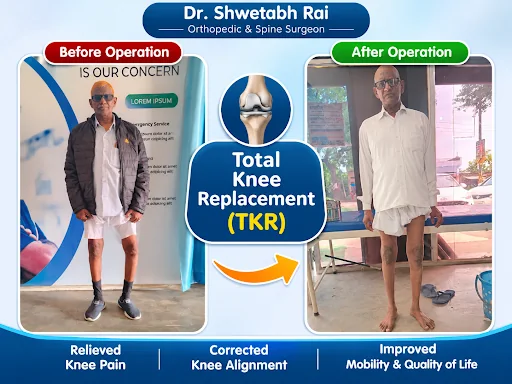
After a total knee replacement most patients walk unaided around six weeks, return to desk work in four to six weeks, drive at six weeks or more, travel home after the two-week wound check and avoid deep squatting and floor sitting in the long term. Partial knee replacement is often a little quicker, and Dr. Rai confirms each of these timings for your knee at your reviews.
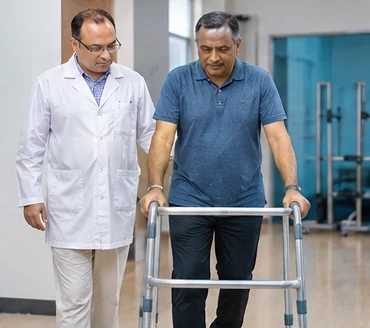
From day 1WalkingYou take your first steps with a walker on the day after surgery, under the physiotherapist's guidance. Most patients move to a single stick by two to three weeks and walk without any support around six weeks. Short, frequent walks are better than one long one: they build strength, reduce swelling and lower the risk of blood clots.
Before dischargeClimbing stairsYou practise a few steps with the physiotherapist before going home, holding the railing. The rule is simple: go up with the good leg first and come down with the operated leg first. Stairs with alternating steps, as you did before surgery, usually return between six and twelve weeks as thigh strength improves.
From week 1Sitting and short car journeysSitting in a firm chair with armrests is fine from the first days, with the knee bent comfortably and not tucked under you. Short car journeys as a passenger are possible in the first week with the leg supported. On any trip longer than an hour, stop and walk for a few minutes to keep the blood moving.
4–6 weeksReturning to workDesk-based work is usually possible from four to six weeks, sometimes from home earlier if you can sit comfortably and take walking breaks. Jobs that involve standing, lifting or fieldwork take eight to twelve weeks or longer. Dr. Rai gives a fitness certificate once your strength and walking are safe for your particular job.
6 weeks or moreDrivingYou may drive after a total knee replacement when three things are true: you are no longer taking strong painkillers, you can bend the knee enough to move between pedals, and you can perform an emergency stop without hesitation. For most patients that is six weeks or more; after a partial knee replacement it can be sooner. Dr. Rai confirms this at the six-week review.
After the 2-week checkTravelling home to your districtMany patients come to Varanasi from Jaunpur, Ghazipur, Azamgarh, Mirzapur, Chandauli or western Bihar. The best time for the journey home is after the two-week wound check, once stitches are out. Travel by train or car with the leg supported, get up and walk every hour, and keep the discharge summary with you in case you need care locally.
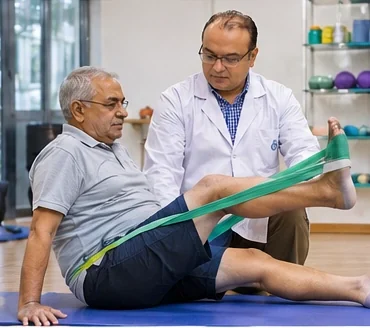
EncouragedLow-impact exercise and sportWalking, stationary or road cycling, swimming once the wound has fully healed, and yoga without deep knee bends are all encouraged. They strengthen the muscles around the new knee without overloading the implant. Build up gradually and stop if the knee swells for more than a day after activity.
AvoidDeep squatting and floor sittingDeep squatting, kneeling for long periods and sitting cross-legged on the floor put very high loads on the implant and are discouraged for the first six weeks and limited in the long term. A Western-style toilet or a commode chair is strongly advised at home. Many patients can manage a brief kneel for prayer or a chair-height seat on the floor later on; Dr. Rai discusses what is realistic for your knee.
AvoidRunning and jumping sportsRunning, jumping, contact sports and sports with sudden twists such as cricket fielding, football or kabaddi put repeated high impact through the implant and can shorten its life. Patients who played these sports are guided towards brisk walking, cycling, swimming or badminton at a gentle pace instead.

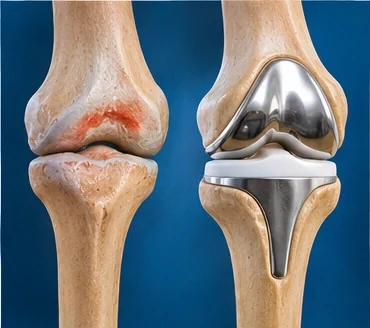
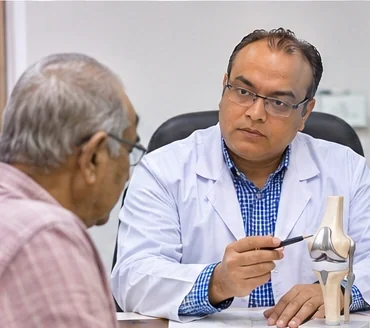
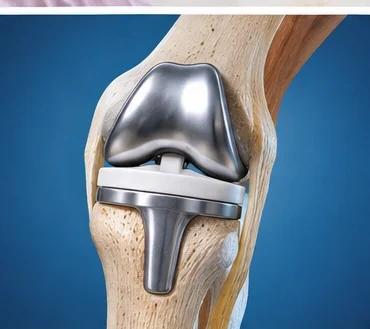
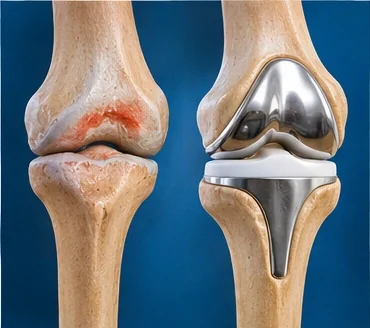
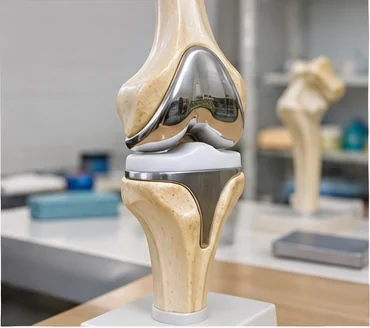
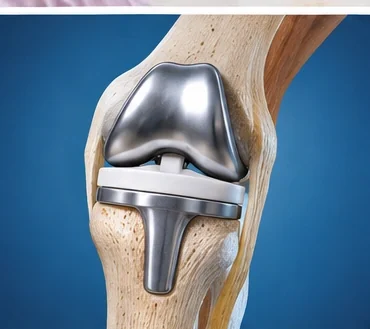
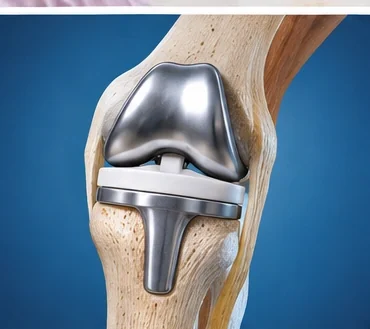 1. Thigh-bone cap
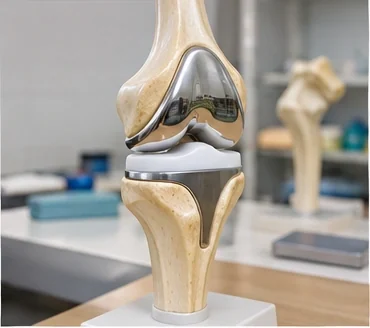 2. Shin-bone tray
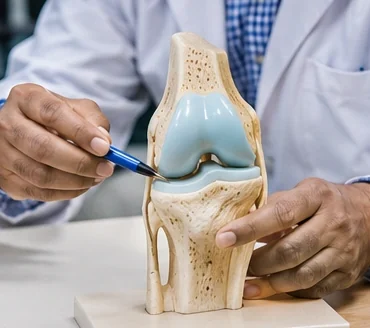 3. Plastic cushion
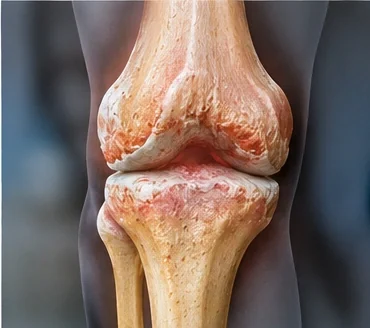 4. Kneecap button