Dr. Shwetabh Rai Orthopedic & Spine Surgeon, Varanasi
Shubhyash Hospital, Bhojuveer · Varanasi

Knee Replacement Surgery in Varanasi with Dr. Shwetabh Rai

Dr. Shwetabh Rai performs total, partial and bilateral knee replacement surgery in Varanasi at Shubhyash Hospital, Bhojuveer, with MS, DNB (Ortho), MCh and SICOT (Belgium) qualifications, 12+ years of experience and 10 to 12 surgeries every month. Non-surgical treatment comes first, and surgery is advised only when it will genuinely help.

  • Total & partial knee replacement
  • Both knees in one sitting
  • Minimally invasive where suitable
  • Physiotherapy from day one
  • Ayushman & insurance accepted

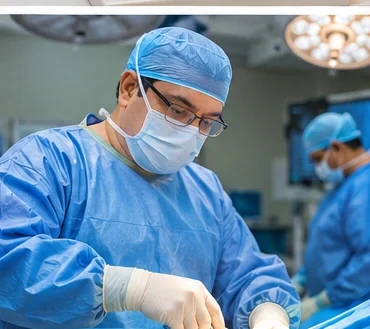
Meet Dr. Shwetabh Rai, Knee Replacement Surgeon in Varanasi

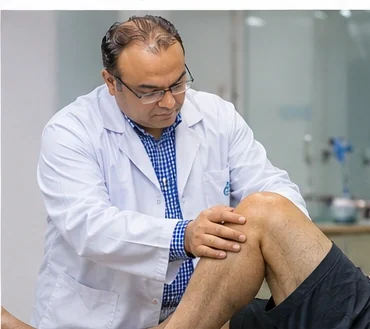
Dr. Shwetabh Rai, knee replacement and orthopedic surgeon at Shubhyash Hospital, Varanasi

Dr. Shwetabh Rai is a consultant orthopedic, joint replacement and spine surgeon in Varanasi who performs 10 to 12 surgeries every month at Shubhyash Hospital & Speciality Clinic, Bhojuveer, specialising in total, partial and bilateral knee replacement, hip replacement, fracture care and arthritis management. His approach is built on a clear diagnosis, an honest explanation of the options, and treatment that matches each patient's age, lifestyle and goals.

He holds an MS and a DNB in Orthopaedics, an MCh, and a Diploma from SICOT (Société Internationale de Chirurgie Orthopédique et de Traumatologie), the international orthopaedic and trauma society based in Belgium. Over more than twelve years of practice he has combined Indian and international training in complex joint replacement with modern trauma management, and he leads orthopaedics and trauma care at Shubhyash Hospital, where he performs 10 to 12 surgeries every month.

Patients and families value three things about his approach. He tries non-surgical treatment first and says so when surgery is not needed. He explains the X-rays, the options, the risks and the costs in plain Hindi or English. And he gives every surgical patient a written plan with expected timelines, so recovery is measured rather than guessed.

Clear diagnosis, honest options, and a recovery plan you can measure.

Dr. Shwetabh RaiMS (Ortho) | DNB (Ortho) | MCh | Diploma SICOT (Belgium) | 12+ years of orthopaedic experience

Book a knee consultation   About Dr. Shwetabh Rai →

Knee Replacement Before and After Results in Varanasi

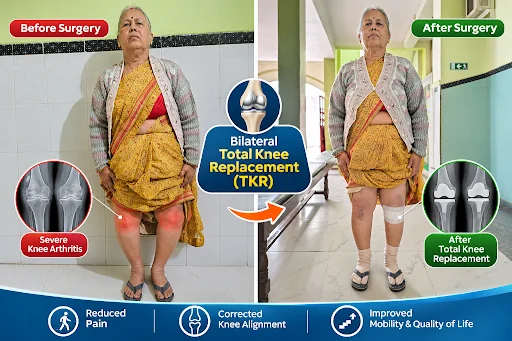
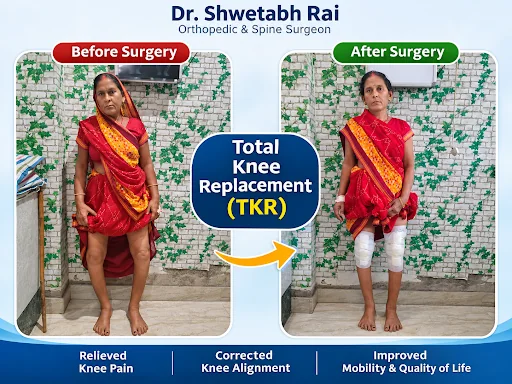
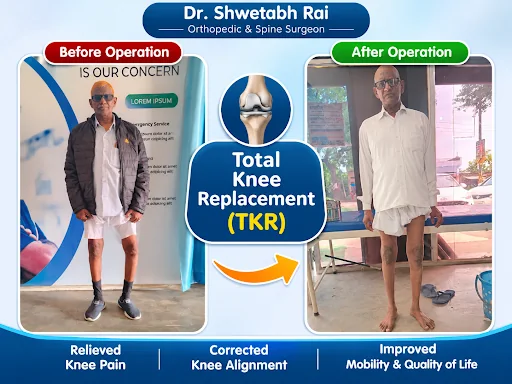
These before-and-after photographs show patients of Dr. Shwetabh Rai at Shubhyash Hospital who had total or bilateral knee replacement for severe knee arthritis, with bow-leg deformity corrected, pain relieved and walking restored. Photographs are shared with each patient's written consent, and results vary from patient to patient.

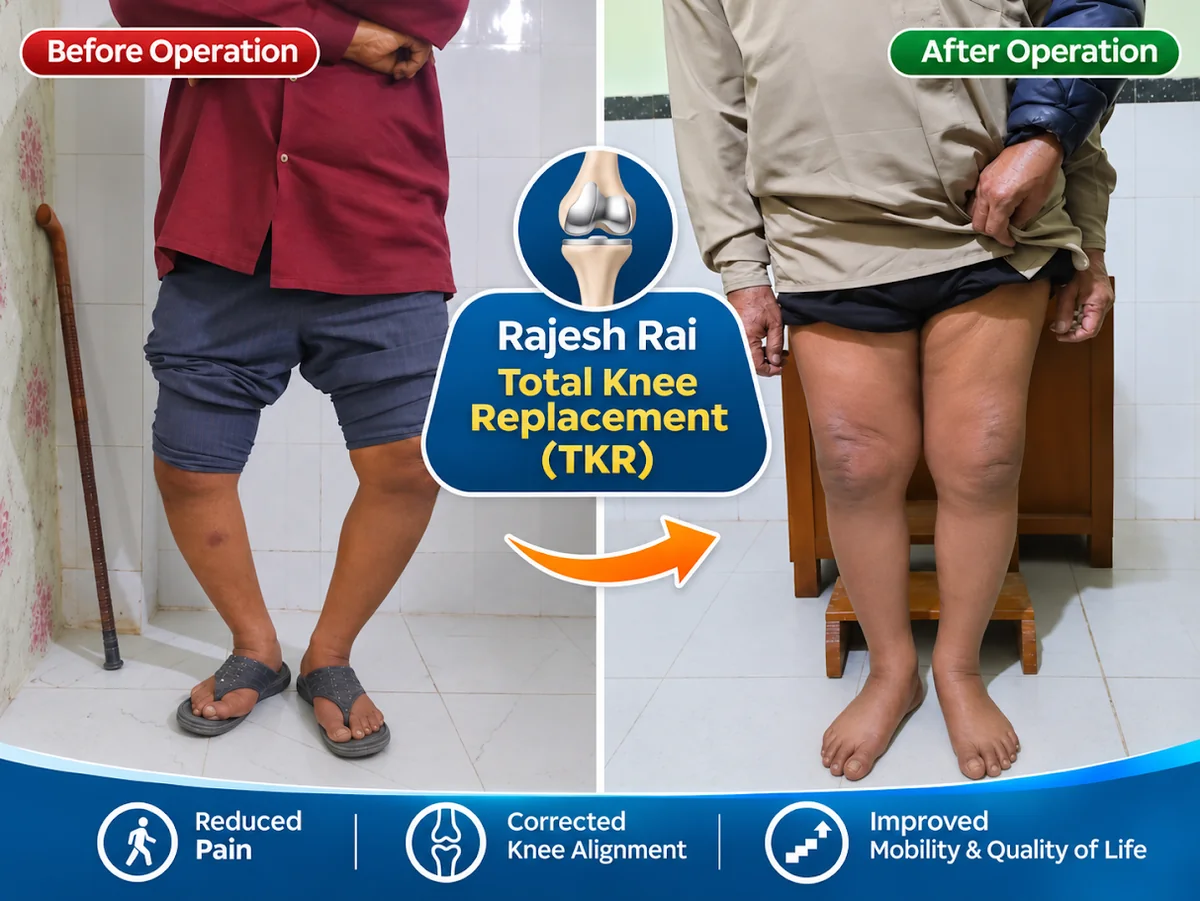
Before and after total knee replacement: bow-leg deformity corrected, patient standing straight without a walking stick
Total Knee Replacement (TKR)

Severe bow-leg deformity from knee arthritis corrected; walking without a stick after surgery.

  • Reduced pain
  • Corrected alignment
  • Improved mobility
Before and after bilateral total knee replacement: elderly woman with severe arthritis in both knees walking in the hospital corridor after surgery
Bilateral Total Knee Replacement

Both knees replaced in one sitting for severe arthritis; walking in the ward during the first week.

  • Reduced pain
  • Corrected alignment
  • Improved mobility
Before and after total knee replacement by Dr. Shwetabh Rai: knee pain relieved and alignment corrected, patient standing upright after surgery
Total Knee Replacement (TKR)

Knee pain relieved and alignment corrected; standing upright and bearing full weight after surgery.

  • Reduced pain
  • Corrected alignment
  • Improved mobility
Before and after total knee replacement by Dr. Shwetabh Rai: elderly man who could not walk comfortably now standing and walking unaided outside the hospital
Total Knee Replacement (TKR)

Knee pain relieved and alignment corrected; standing and walking unaided after surgery.

  • Reduced pain
  • Corrected alignment
  • Improved mobility
1 / 4

Individual results depend on the condition of the knee, overall health and how regularly physiotherapy is done. Bring your X-rays to a consultation to discuss what is realistic for your knee.

What Is Knee Replacement Surgery (Knee Arthroplasty)?

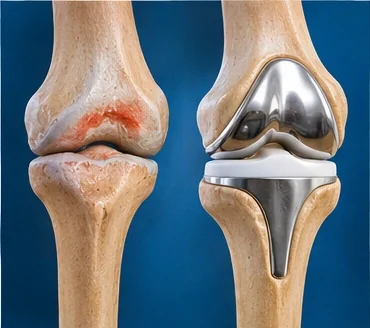
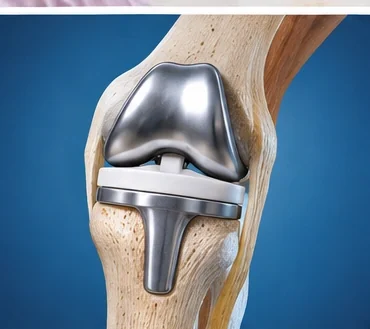
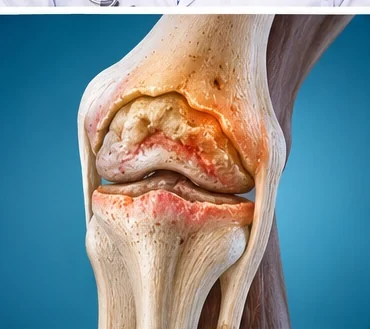
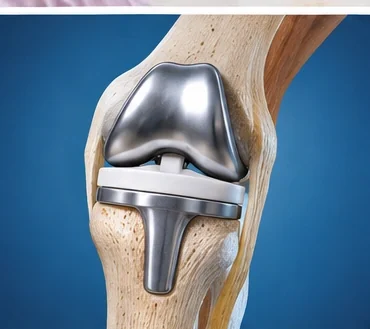
Knee replacement surgery (the medical term is knee arthroplasty) replaces the worn-out surfaces of the knee joint with smooth, precisely fitted metal and medical-grade plastic components. It is a resurfacing operation: only the damaged cartilage and a thin layer of bone are removed from the end of the thigh bone (femur) and the top of the shin bone (tibia). Your muscles and most of your ligaments stay in place and keep working the new joint.

The knee has three compartments: inner (medial), outer (lateral) and the one behind the kneecap (patellofemoral). A total knee replacement resurfaces all three. A partial knee replacement resurfaces only the damaged compartment. Which one suits you depends on where the arthritis is, how well your ligaments work, and the alignment of your leg, all of which Dr. Rai checks on examination and X-ray.

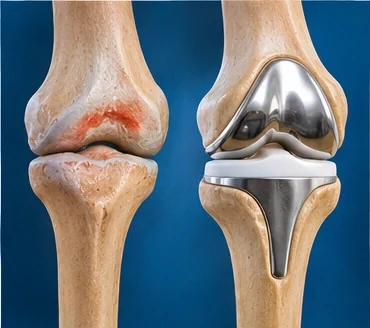
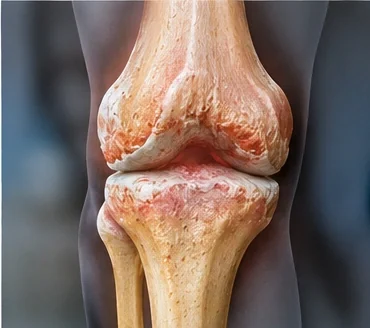
Illustration of an arthritic knee beside a knee with a total knee replacement implant in place
Healthy knee, arthritic knee and knee after replacement.

Who Needs Knee Replacement Surgery in Varanasi?

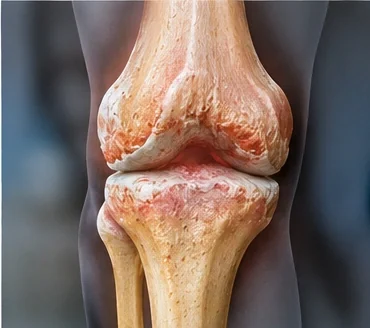
Knee replacement surgery is needed when advanced knee arthritis causes pain that limits walking, stairs and sleep despite three to six months of medicines, physiotherapy, weight control and injections, and X-rays show bone touching bone. Age alone is not the deciding factor; the state of the knee and your overall health decide, and three or more of the eight signs below mean it is time for a knee replacement assessment in Varanasi.

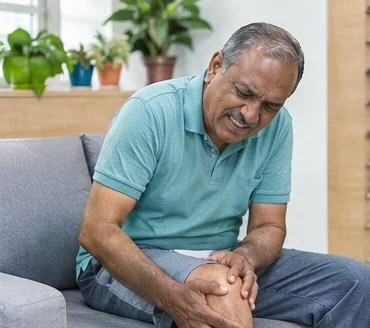
Man with knee arthritis pain holding his knee, struggling to climb stairs

Knee Pain When Walking and Climbing Stairs

Knee arthritis pain that limits walking to short distances and turns stairs into a daily struggle is the most common reason patients in Varanasi are assessed for knee replacement surgery. When the cartilage has worn away, every step grinds bone on bone, so walking to the market, climbing to a first-floor flat or managing temple steps becomes painful and slow.

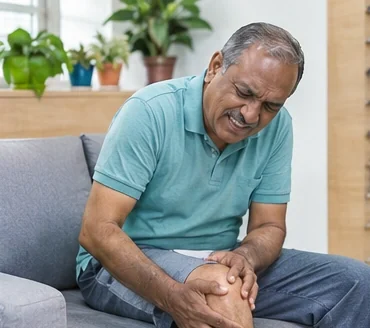
Patient with night-time knee pain holding a swollen arthritic knee

Knee Pain at Night That Disturbs Sleep

Knee pain that wakes you at night or does not settle even with rest is a sign of advanced knee arthritis rather than simple overuse. Rest pain means the joint is inflamed and worn through, and it rarely improves with medicines alone, which is why night pain is one of the clearest indicators that a knee replacement assessment is due.

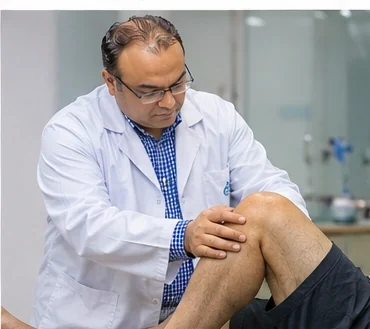
Orthopedic surgeon examining a stiff, swollen knee joint

Stiff, Swollen or Grinding Knee Joint

Knee stiffness, swelling or a grinding and clicking feeling that has lasted for months rather than days points to osteoarthritis of the knee joint. A stiff knee that will not fully straighten or bend, with swelling after activity, shows that the joint surfaces are damaged, and an orthopedic examination with an X-ray will confirm how far the arthritis has progressed.

Illustration of a bow-leg deformity caused by knee arthritis

Bow-Leg or Knock-Knee Deformity

Increasing bow-leg (varus) or knock-knee (valgus) deformity that you or your family can see is a sign that knee arthritis has worn one side of the joint more than the other. Deformity gets worse over time, loads the remaining cartilage faster and makes bracing less effective, and it is corrected during total knee replacement so the leg is straight again.

Doctor examining a patient who struggles to rise from a chair

Difficulty Rising From a Chair, Squatting or Floor Sitting

Difficulty getting up from a chair, squatting or sitting cross-legged on the floor is an early loss of knee function that affects daily life, prayer and family meals. When the knee cannot bend or take load without pain, the thigh muscles weaken further, and this cycle of pain and weakness is one of the problems knee replacement surgery is designed to break.

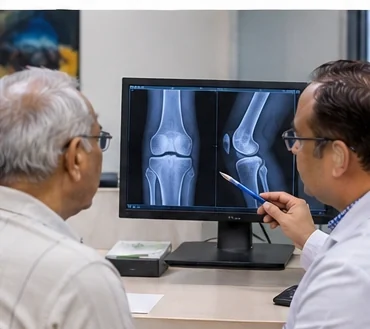
Doctor reviewing a knee X-ray showing bone touching bone

Knee Arthritis Treatment No Longer Helping

When medicines, physiotherapy, weight loss and joint injections have been tried properly for three to six months and knee pain still controls your day, and the X-ray shows bone touching bone with the joint space gone, non-surgical knee arthritis treatment has reached its limit. At this stage knee replacement surgery in Varanasi offers the most reliable relief.

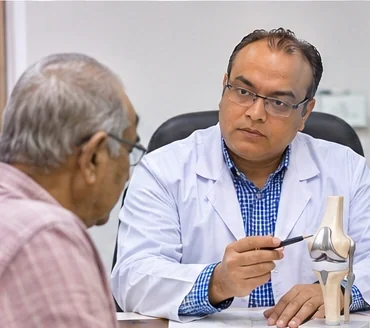
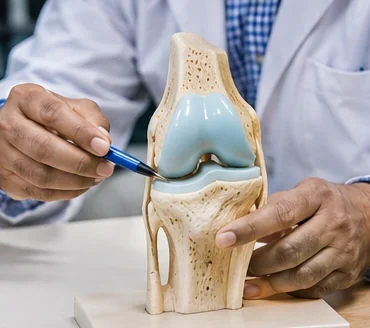
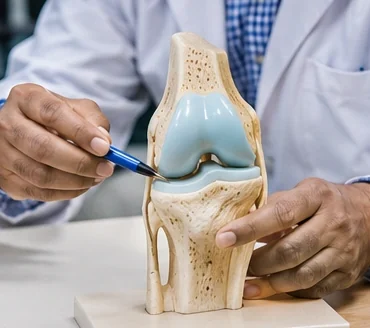
Surgeon explaining knee arthritis damage to a patient using a knee model

Rheumatoid Arthritis or Post-Injury Arthritis of the Knee

Knee replacement is also advised for rheumatoid arthritis that has destroyed the joint surfaces despite medical treatment, and for arthritis that develops years after a knee fracture or ligament injury. In these knees the damage is often more widespread, so Dr. Rai plans the implant and the alignment carefully on examination and X-ray.

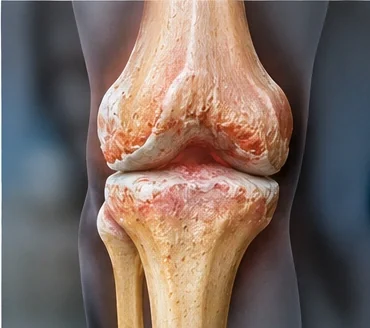
Arthritic knee beside a knee with a total knee replacement implant

Age Is Not the Deciding Factor

Age alone does not decide whether you need knee replacement surgery; the condition of the knee and your overall health matter more. Fit patients in their seventies and eighties regularly benefit, and younger patients with badly damaged knees are not refused on age alone, provided heart, lung, kidney and sugar fitness are checked before surgery.

1 / 8
Conservative first

When Knee Pain Treatment Without Surgery Works Better

Most people with knee arthritis do not need knee replacement surgery, because early and middle-stage osteoarthritis usually improves with weight control, quadriceps strengthening, medicines reviewed for safety and, in selected knees, joint injections, and Dr. Rai says so when that is the case.

  • Weight & exerciseWeight control and quadriceps strengthening
  • MedicinesReviewed for safety and long-term use
  • Physio & footwearActivity changes and correct footwear
  • InjectionsIn selected knees only

Mild wear on X-ray, or pain from a meniscus or ligament problem, needs different treatment. See knee pain treatment in Varanasi and arthritis & joint pain management.

Discuss your X-rays with Dr. Rai

Types of Knee Replacement Surgery Available in Varanasi

Dr. Shwetabh Rai offers five types of knee replacement surgery in Varanasi, total, partial, bilateral, minimally invasive and revision, and the type is chosen on examination and X-ray findings rather than by default. Select a type below to see what it involves, who it suits and how recovery differs.

Total knee replacement: all three compartments resurfaced

Total Knee Replacement

The most common operation. All three compartments of the knee are resurfaced, the leg is realigned, and bow-leg or knock-knee deformity is corrected at the same time. It suits advanced osteoarthritis and rheumatoid arthritis and is the procedure Dr. Rai performs most often.

  • All three joint surfaces are replaced with metal and medical-grade plastic
  • Suits advanced arthritis, deformity and rheumatoid arthritis
  • Walking unaided around six weeks; improving for up to a year

Bilateral Knee Replacement in Varanasi: Both Knees in One Sitting or One at a Time

Bilateral (double) knee replacement in one sitting suits fitter patients with severe arthritis in both knees and strong family support, because it means one anaesthetic, one admission and one recovery, while staged surgery a few weeks to months apart suits older patients or those with heart, lung or kidney conditions. Dr. Rai recommends the simultaneous option only after checking heart, lung, kidney and blood-sugar health, since the first two weeks are more demanding.

Both knees in one sitting

Simultaneous Bilateral Knee Replacement

  • One anaesthetic, one admission, one recovery
  • Shorter total time away from normal life
  • More demanding first two weeks; needs good fitness and family support
  • Costs less than two separate admissions

Usually advised for: fitter patients with severe disease in both knees and strong home support.

One knee at a time

Staged Knee Replacement, a Few Weeks to Months Apart

  • Two admissions, two shorter recoveries
  • The better knee supports the operated one
  • Lower physical demand in the first weeks
  • Cost spread over two admissions

Usually advised for: older patients, those with heart or lung conditions, or when one knee is clearly worse.

Knee Implant Types and Materials Used in Knee Replacement Surgery

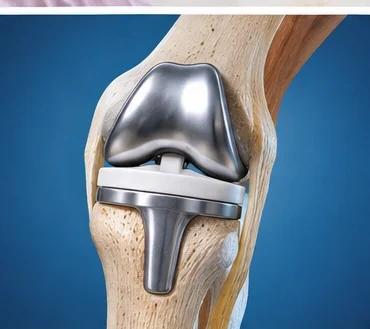
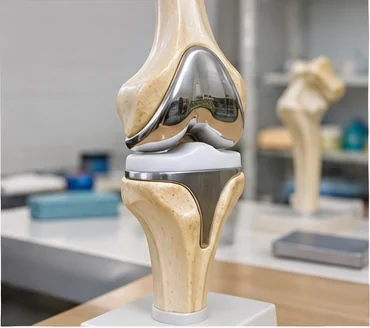
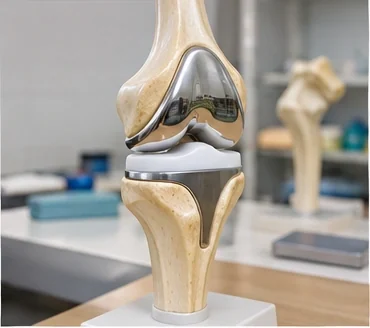
A knee implant has four parts, a cobalt-chrome cap on the thigh bone, a metal tray on the shin bone, a medical-grade polyethylene cushion between them and an optional plastic kneecap button, and registry data show about 82% of total knee implants are still in place 25 years after surgery. The brand and model are written in your discharge summary, which you should keep for life.

Femoral component: metal cap for the thigh bone1. Thigh-bone capMetal (femoral component)
Tibial component: metal tray for the shin bone2. Shin-bone trayMetal (tibial component)
Polyethylene insert: the plastic cushion of a knee implant3. Plastic cushionMedical-grade polyethylene insert, the new cartilage
Patellar button: plastic resurfacing of the kneecap4. Kneecap buttonPlastic, only if the kneecap surface is worn

Knee Implant Choices Explained Simply for Patients

  • Metal typeCobalt-chrome is standard; titanium or coated metal if you have a metal allergy
  • Plastic cushionStandard or cross-linked polyethylene, which wears more slowly
  • How it is fixedBone cement is usual in India; uncemented lets bone grow into the implant
  • Ligament designKeeps your back knee ligament (CR) or replaces its job (PS)
  • BearingFixed or slightly rotating plastic; long-term results are similar
  • What decides itBone quality, age, activity level, ligament condition and deformity, judged on examination and X-ray

The most expensive knee implant is not automatically the best one. What matters is the right design for your bone and activity, put in accurately and aligned well.

How Knee Replacement Surgery Is Performed Step by Step

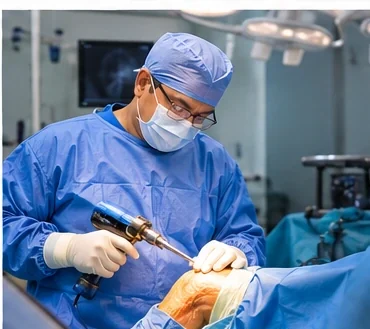
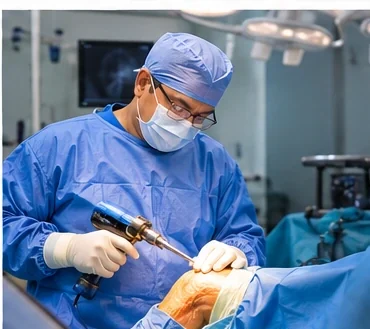
Knee replacement surgery takes one to two hours per knee under spinal or general anaesthesia and follows six steps, anaesthesia, incision, preparing the bone, balancing, fitting the trial and final implants, and closure, after which most patients stand with a walker within a day. Click a step or use the arrows to walk through the operation.

Anaesthetist and surgical team preparing for knee replacement
Step 1 of 6

Anaesthesia

You are made comfortable and pain-free

Usually spinal anaesthesia, which numbs you from the waist down while you stay comfortable and drowsy. General anaesthesia is used when spinal is unsuitable. A nerve block is often added for pain relief afterwards.

Benefits of Knee Replacement Surgery for Knee Arthritis

Knee replacement surgery relieves arthritis pain, restores walking distance and straightens a bowed or knock-kneed leg for the large majority of patients, and registry data covering more than 290,000 knees show about 82% of total knee replacements still working 25 years later. Results are good but not identical for everyone, which is why these six benefits are described as what most patients report.

Lasting Pain Relief

Relief from the constant, grinding pain of advanced arthritis, including the night pain that disturbs sleep.

Improved Mobility

Longer walking distance, easier stairs and getting up from a chair without holding on.

Straighter, Stable Leg

Bow-leg or knock-knee deformity is corrected during the operation, improving balance and gait.

Better Quality of Life

Independence in daily tasks, travel, visiting family and temples, and light work return for most patients.

Long-Term Durability

Registry data from more than 290,000 knees show about 82% of total knee replacements still in place at 25 years.

Confidence and Well-Being

Less pain and more movement usually mean better sleep, mood and confidence to go out again.

Improvement continues for months after surgery. A small number of patients keep some discomfort or stiffness, and the new knee will not feel exactly like a young natural knee.

Risks and Complications of Knee Replacement Surgery

Knee replacement complications affect a small minority of patients and include infection, blood clots, stiffness, persistent pain, nerve or vessel injury and long-term implant wear, each of which is reduced by a specific precaution described below. Dr. Rai explains every one of these risks before you consent, and diabetes, smoking, obesity and weak muscles raise them.

Infection

Of the wound or, rarely, deep around the implant. Reduced by antibiotics, sterile technique and good sugar control.

Blood Clots

In the leg (DVT) or lung. Reduced by early walking, compression and blood-thinning medicine.

Stiffness

Limited bending after surgery. Usually prevented by doing the physiotherapy programme daily.

Persistent Pain

Some discomfort or a knee that does not feel fully natural. Uncommon, and reviewed at follow-up.

Nerve, Vessel or Bone Injury

Injury to nearby nerves or vessels, or a fracture around the implant. Uncommon.

Wear or Loosening

Over many years the implant may loosen or wear and need revision surgery.

Diabetes, smoking, obesity and poor muscle strength increase risk; improving these before surgery improves your result. Anaesthesia risks are higher with uncontrolled heart, lung, kidney or sugar problems, which is why they are checked first.

Knee Replacement Recovery Timeline: Preparation, Hospital Stay and Week-by-Week Recovery

Knee replacement recovery follows six phases, from two to four weeks of preparation through a one-to-four-day hospital stay to full recovery at about one year, with most patients walking with a walker within a day and without a stick around six weeks. Partial knee replacement is usually quicker, bilateral replacement a little slower in the first weeks, and age, diabetes control and muscle strength all affect the timeline.

  1. 1
    Before surgery

    Preparing for Knee Replacement Surgery

    2–4 weeks of prep

    Good preparation makes surgery safer and the first week easier. Once a date is fixed, Dr. Rai's team guides you through it.

    • Tests: blood tests, ECG, chest and knee X-rays; heart check if needed
    • Medicines reviewed; blood thinners and some diabetes tablets paused
    • Sugar, blood pressure and thyroid controlled; stop smoking
    • Dental, skin and urine infections treated first
    • Simple thigh-muscle exercises for two to four weeks
    • Home ready: firm chair, Western toilet or commode, walker, no loose rugs
    • A family attendant arranged for hospital and the first weeks at home
  2. 2
    Days 0–4

    Hospital Stay and Post-Operative Care

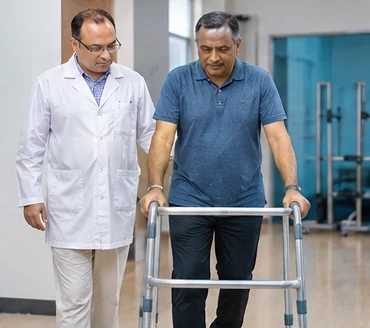
    Walker within a day

    The first days are about pain control, safe first steps and getting you home.

    • Day 0: nerve block, injections and tablets for pain; ankle pumps and breathing exercises
    • Day 1: first steps with a walker; knee bending starts; clot-prevention medicine
    • Days 2–4: longer walks, sitting, standing and a few stairs; dressing checked
    • Home once pain is controlled, the wound is dry and you walk safely with support
    • Written plan at discharge: medicines, wound care, exercises, warning signs, follow-up dates
  3. 3
    Weeks 1–2

    Weeks 1–2 After Knee Replacement: Settling in at Home

    Stitches out at 2 weeks

    Short walks, daily bending exercises and keeping swelling down.

    • Walking indoors with walker or stick
    • Knee bends to about 90 degrees
    • Ice and elevation for swelling
  4. 4
    Weeks 3–6

    Weeks 3–6 After Knee Replacement: Building Strength

    No stick for many by week 6

    The knee starts to feel like yours; most people drop the stick in this window.

    • Walking outside with a stick, then unaided
    • Desk work from home; six-week review
    • Driving once off strong painkillers
  5. 5
    Weeks 6–12

    Weeks 6–12 After Knee Replacement: Back to Work and Travel

    Work and travel resume

    Work, stairs and travel return as strength and confidence grow.

    • Office work; physical jobs 8–12 weeks
    • Stairs with alternating steps
    • Train or road travel with hourly walks
  6. 6
    Months 3–12

    Months 3–12 After Knee Replacement: Long-Term Recovery

    Full recovery up to a year

    Improvement continues for months; a few habits protect the implant for life.

    • Strength and confidence keep improving
    • Walking, cycling, swimming encouraged
    • Deep squatting stays limited

Physiotherapy After Knee Replacement in Varanasi: Five Recovery Goals

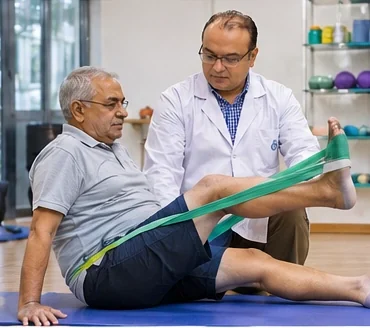
Physiotherapy after knee replacement starts on the day of surgery at Shubhyash Hospital and continues for six to twelve weeks, in hospital or at home with a trained physiotherapist, working through five goals: a straight knee, a bend past 90 degrees, a strong thigh, a normal walk and safe stairs. It is physiotherapy, not the implant alone, that turns a well-placed knee into one that bends, straightens and bears weight with confidence.

Physiotherapist guiding knee bending exercises after knee replacement at Shubhyash Hospital, Varanasi

Five goals your physiotherapist works towards

  1. Week 1Straight kneeFull extension when lying flat
  2. Week 2Bend past 90°Enough to sit in a chair comfortably
  3. Week 4Strong thighQuadriceps control for stairs and standing
  4. Week 6Normal walkEven steps, no limp, stick put away
  5. Week 12Safe stairs & daily lifeAlternating steps, longer walks, travel

Follow the plan you are given. Exercises copied from social media or videos may be wrong for your stage of recovery.

Daily Life After Knee Replacement Surgery: What You Can Do and When

After a total knee replacement most patients walk unaided around six weeks, return to desk work in four to six weeks, drive at six weeks or more, travel home after the two-week wound check and avoid deep squatting and floor sitting in the long term. Partial knee replacement is often a little quicker, and Dr. Rai confirms each of these timings for your knee at your reviews.

From day 1WalkingYou take your first steps with a walker on the day after surgery, under the physiotherapist's guidance. Most patients move to a single stick by two to three weeks and walk without any support around six weeks. Short, frequent walks are better than one long one: they build strength, reduce swelling and lower the risk of blood clots.
Before dischargeClimbing stairsYou practise a few steps with the physiotherapist before going home, holding the railing. The rule is simple: go up with the good leg first and come down with the operated leg first. Stairs with alternating steps, as you did before surgery, usually return between six and twelve weeks as thigh strength improves.
From week 1Sitting and short car journeysSitting in a firm chair with armrests is fine from the first days, with the knee bent comfortably and not tucked under you. Short car journeys as a passenger are possible in the first week with the leg supported. On any trip longer than an hour, stop and walk for a few minutes to keep the blood moving.
4–6 weeksReturning to workDesk-based work is usually possible from four to six weeks, sometimes from home earlier if you can sit comfortably and take walking breaks. Jobs that involve standing, lifting or fieldwork take eight to twelve weeks or longer. Dr. Rai gives a fitness certificate once your strength and walking are safe for your particular job.
6 weeks or moreDrivingYou may drive after a total knee replacement when three things are true: you are no longer taking strong painkillers, you can bend the knee enough to move between pedals, and you can perform an emergency stop without hesitation. For most patients that is six weeks or more; after a partial knee replacement it can be sooner. Dr. Rai confirms this at the six-week review.
After the 2-week checkTravelling home to your districtMany patients come to Varanasi from Jaunpur, Ghazipur, Azamgarh, Mirzapur, Chandauli or western Bihar. The best time for the journey home is after the two-week wound check, once stitches are out. Travel by train or car with the leg supported, get up and walk every hour, and keep the discharge summary with you in case you need care locally.
EncouragedLow-impact exercise and sportWalking, stationary or road cycling, swimming once the wound has fully healed, and yoga without deep knee bends are all encouraged. They strengthen the muscles around the new knee without overloading the implant. Build up gradually and stop if the knee swells for more than a day after activity.
AvoidDeep squatting and floor sittingDeep squatting, kneeling for long periods and sitting cross-legged on the floor put very high loads on the implant and are discouraged for the first six weeks and limited in the long term. A Western-style toilet or a commode chair is strongly advised at home. Many patients can manage a brief kneel for prayer or a chair-height seat on the floor later on; Dr. Rai discusses what is realistic for your knee.
AvoidRunning and jumping sportsRunning, jumping, contact sports and sports with sudden twists such as cricket fielding, football or kabaddi put repeated high impact through the implant and can shorten its life. Patients who played these sports are guided towards brisk walking, cycling, swimming or badminton at a gentle pace instead.

Knee Replacement Warning Signs: Call Us Immediately If

  • Fever above 38°C (100.4°F), or redness, warmth, increasing pain or discharge from the wound
  • New calf pain or swelling, shortness of breath or chest pain (possible blood clot)
  • A fall on the operated knee, sudden inability to bear weight, or a new deformity
  • Pain getting worse rather than better after the first two weeks

Shubhyash Hospital's emergency service runs 24x7.

Call +91 99567 61112

How Much Does Knee Replacement Surgery Cost in Varanasi?

Knee replacement surgery cost in Varanasi depends on six factors, one knee or both, implant choice, surgical approach, room category and stay, your health conditions and what the package includes, so Shubhyash Hospital gives a written estimate after consultation and X-rays rather than a fixed price, and accepts Ayushman Bharat, health insurance and cashless TPA. Any website quoting one fixed price without examining you is guessing.

Sample written estimateShubhyash Hospital · Knee replacementYour name · Date · One knee / both knees
  • Implant (brand and model named)₹ ———
  • Surgeon and operation theatre₹ ———
  • Anaesthesia₹ ———
  • Room and hospital stay (days)₹ ———
  • Medicines and consumables₹ ———
  • Physiotherapy sessions₹ ———
  • Follow-up visits₹ ———
Each line listed separately, so you can compare like with like
Given in writing after consultation
What changes the number

Six Factors Behind Your Knee Replacement Estimate

  • 1
    One knee or bothBoth in one sitting costs less than two admissions, more than one knee
  • 2
    Implant choiceStandard cobalt-chrome vs special alloys; standard vs cross-linked plastic
  • 3
    ApproachConventional or minimally invasive
  • 4
    Room category and days in hospitalGeneral ward to private room; usually 1–4 days
  • 5
    Your healthExtra tests, specialist review or ICU observation if needed
  • 6
    What the package includesAsk whether physiotherapy and follow-ups are in or extra
Ayushman Bharat, health insurance and cashless TPA are all accepted. Share your card or policy before the date is fixed so eligibility and pre-authorisation can be arranged.
WhatsApp for a written estimate
Affordable treatment

Affordable Knee Replacement in Varanasi with Ayushman Bharat and Insurance

Shubhyash Hospital makes knee replacement affordable for families across Purvanchal by accepting Ayushman Bharat (PM-JAY), all major health insurers and cashless TPA, and by pricing transparently, with hip replacement starting from around ₹60,000 against roughly ₹1 lakh commonly quoted elsewhere in the region. Every estimate is written and itemised, so cost is not the reason to delay a knee that needs fixing.

Ayushman Bharat (PM-JAY)Eligible patients can be treated under the Ayushman Bharat scheme. Bring your Ayushman card and ID to the first consultation so eligibility can be checked before a date is fixed.
Health insurance & cashless TPAAll major health insurers and third-party administrators are accepted. Share your policy early so pre-authorisation can be arranged and you know what is covered for implants and room rent.
Transparent pricingAs a reference, hip replacement at Shubhyash Hospital starts from around ₹60,000, against roughly ₹1 lakh commonly quoted elsewhere in the region. Your knee replacement estimate is given in writing after consultation and X-rays, with every item listed.

How to Choose the Best Knee Replacement Surgeon in Varanasi

The best knee replacement surgeon in Varanasi is one who combines postgraduate orthopaedic qualifications, a regular joint replacement practice, a conservative-first approach, clear explanations, full hospital support and personal follow-up, and Dr. Shwetabh Rai meets all six of these checks. Use them to compare any surgeon you are considering.

Super-Specialty Qualifications

MS, DNB (Ortho), MCh and an international SICOT diploma (Belgium): postgraduate orthopaedic training plus joint replacement expertise.

Knee Replacement Is Core Work

12+ years of practice and 10–12 surgeries every month; total, partial and bilateral knee replacement are what Dr. Rai does regularly, not occasionally.

Conservative First

Non-surgical options come first. Many patients are treated without an operation, and Dr. Rai says so when surgery is not needed.

Clear Explanations

X-rays, implant, risks and costs explained in plain Hindi or English, with a written plan and a written estimate.

Hospital Support Under One Roof

Shubhyash Hospital, Bhojuveer: equipped theatre, in-house imaging, physiotherapy, OPD till 10 PM and 24x7 trauma and emergency.

Personal Follow-Up

The operating surgeon sees you after discharge: reviews at two weeks, six weeks, three months and one year.

Our testimonials

Patient Reviews of Knee Replacement with Dr. Shwetabh Rai

These verified Google reviews come from patients treated for knee and joint problems by Dr. Shwetabh Rai at Shubhyash Hospital, Varanasi, and are reproduced in the patients' own words.

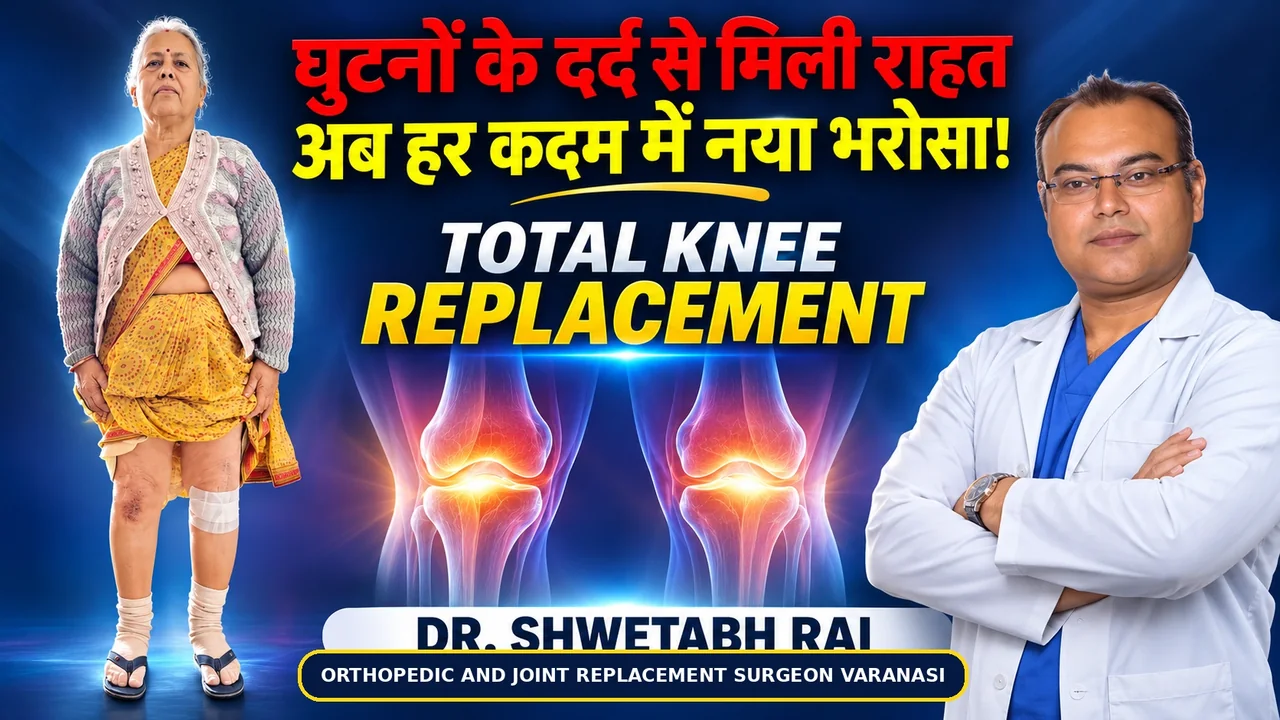
Elderly woman after total knee replacement with Dr. Shwetabh Rai, Varanasi: knee pain relieved
टोटल नी रिप्लेसमेंटGoogle

घुटनों के दर्द से मिली राहत, अब हर कदम में नया भरोसा!

कल्पना राय

★★★★★

"घुटनों में दर्द की वजह से चलने-फिरने और सीढ़ियाँ चढ़ने में बहुत परेशानी होती थी। डॉ. श्वेताभ राय ने मेरी समस्या को ध्यान से समझाया और इलाज की पूरी जानकारी दी। ऑपरेशन के बाद फिजियोथेरेपी से धीरे-धीरे चलने में सुधार हुआ। इलाज और देखभाल का अनुभव अच्छा रहा।"

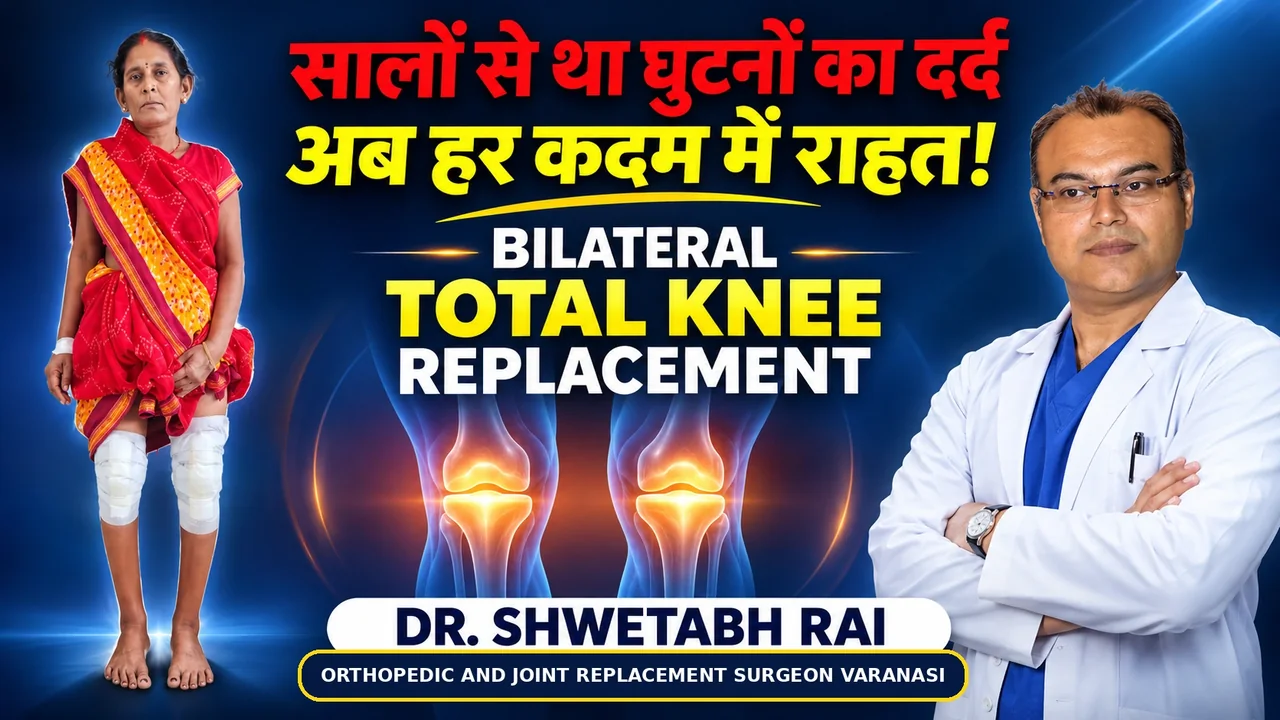
Woman after bilateral total knee replacement with Dr. Shwetabh Rai, Varanasi: years of knee pain relieved
बाइलेटरल टोटल नी रिप्लेसमेंटGoogle

सालों से था घुटनों का दर्द, अब मिली राहत!

सुशीला देवी

★★★★★

"दोनों घुटनों में लंबे समय से दर्द था। रोज़मर्रा के काम करने और चलने में दिक्कत होती थी। डॉ. श्वेताभ राय ने दोनों घुटनों के ऑपरेशन और रिकवरी की प्रक्रिया अच्छे से समझाई। इलाज के बाद नियमित एक्सरसाइज़ और फिजियोथेरेपी से चलने में काफी सुधार महसूस हुआ।"

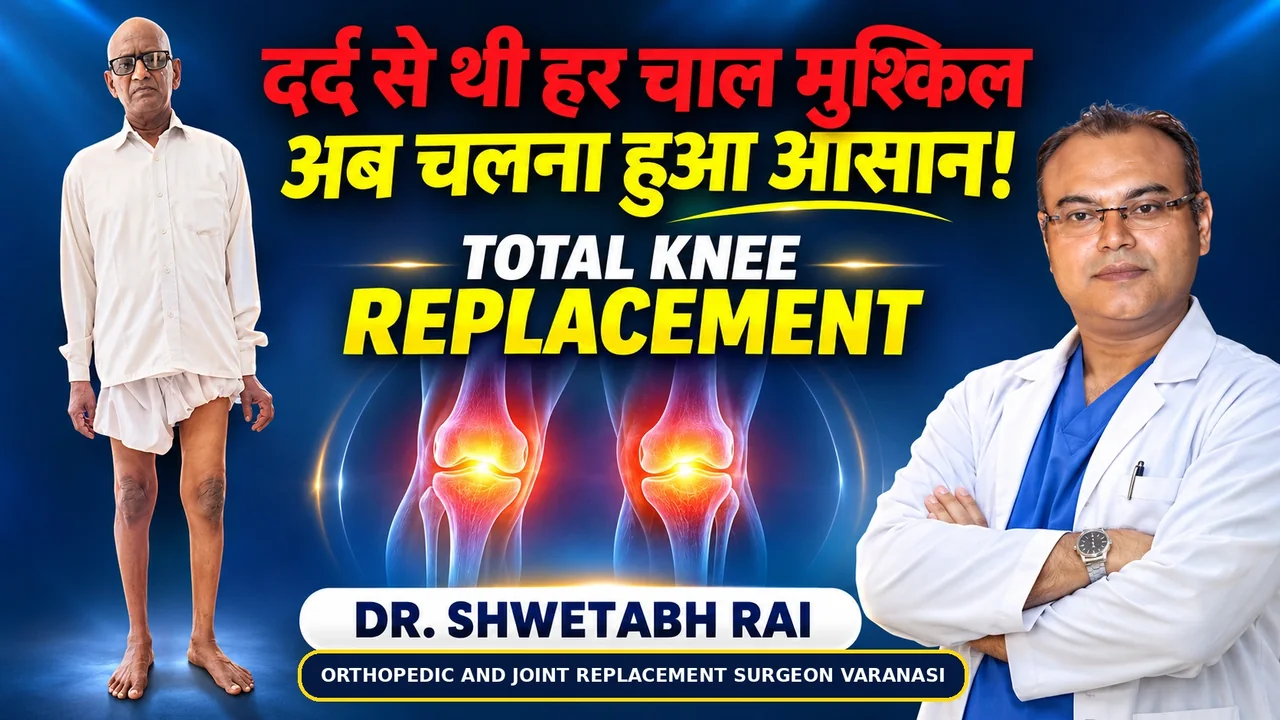
Elderly man after total knee replacement with Dr. Shwetabh Rai, Varanasi: walking made easy
टोटल नी रिप्लेसमेंटGoogle

दर्द से थी हर चाल मुश्किल, अब चलना हुआ आसान!

राजेश कुमार सिंह

★★★★★

"घुटने के दर्द से काफी समय से परेशान थी। उठने-बैठने और घर के काम करने में मुश्किल होती थी। डॉ. श्वेताभ राय ने जांच के बाद घुटना बदलने की सलाह दी और हमारी सभी शंकाएँ दूर कीं। ऑपरेशन के बाद नियमित फिजियोथेरेपी से मेरी चलने-फिरने की क्षमता में सुधार हुआ।"

Read all reviews on Google

Knee Replacement Hospital in Varanasi: Shubhyash Hospital, Bhojuveer

Shubhyash Hospital & Speciality Clinic at Kautilya Kon Road, near Vishal Mega Mart, Bhojuveer, Varanasi 221002 is the knee replacement hospital where Dr. Shwetabh Rai consults and operates, with an OPD open until 10:00 PM and a 24x7 trauma and emergency service, so consultation, X-rays, surgery, physiotherapy and follow-up all happen under one roof. Patients come from every part of Varanasi and from Chandauli, Ghazipur, Jaunpur, Azamgarh, Mau, Ballia, Mirzapur, Bhadohi, Sonbhadra and western Bihar; for out-of-town families the team tries to schedule consultation, X-ray and MRI review in a single visit. Areas we serve →

Book a Knee Replacement Consultation

Hospital
Shubhyash Hospital & Speciality Clinic
Kautilya Kon Road, Near Vishal Mega Mart, Bhojuveer, Varanasi, Uttar Pradesh 221002
Appointments
+91 99567 61112 (call or WhatsApp)
Hospital desk
+91 93696 80496
Hours
OPD till 10:00 PM · Emergency 24x7

Get directions

Your Knee Replacement Journey at Shubhyash Hospital, Step by Step

Knee replacement at Shubhyash Hospital follows five stops from your first consultation to the one-year review, and many patients leave the first visit with a non-surgical plan rather than a surgery date.

Start: call or WhatsApp +91 99567 61112
  1. 1
    OPD visit · 30–40 min

    Consultation & Examination

    History, examination of both knees and X-ray review. Bring previous reports, prescriptions and a list of medicines.

    You leave withA clear diagnosis, and often a non-surgical plan
  2. 2
    Same visit or a follow-up

    Decision & Written Plan

    If surgery is advised: type of replacement, implant, expected stay and recovery timeline, all in writing.

    You leave withA written plan and a written cost estimate
  3. 3
    1–2 weeks before

    Pre-Operative Work-Up

    Blood tests, ECG, X-rays; physician or anaesthetist review; simple strengthening exercises at home.

    You leave withFitness confirmed and a surgery date
  4. 4
    Usually 1–4 days

    Surgery & Hospital Stay

    Operation of one to two hours per knee. Physiotherapy from day one; first steps with a walker within a day.

    You leave withHome, walking with support, with a discharge plan
  5. 5
    2 weeks → 1 year

    Recovery & Follow-Up

    Wound check at about two weeks, then reviews at six weeks, three months and one year with Dr. Rai.

    You leave withA knee that bends, straightens and walks without pain
Finish: walking without knee pain

Frequently Asked Questions About Knee Replacement in Varanasi

These answers cover the questions patients and families in Varanasi ask most about knee replacement: cost and Ayushman Bharat cover, hospital stay, when walking and driving return, both knees at once, implant lifespan and how to book. For anything specific to your knee, bring your X-rays to a consultation.

Ask Dr. Rai's team

Who is the best knee replacement doctor in Varanasi?

The best knee replacement doctor for you is one with postgraduate orthopaedic training, a regular joint replacement practice, a conservative-first approach and a hospital with 24x7 support.

Dr. Shwetabh Rai holds MS, DNB (Ortho) and MCh qualifications plus a Diploma from SICOT (Belgium), has 12+ years of experience and performs 10–12 surgeries a month at Shubhyash Hospital, Bhojuveer. Compare any surgeon on those criteria, not on online lists.

  • Ask how often the surgeon performs knee replacement
  • Ask whether non-surgical options were explained first
  • Ask who sees you after discharge
How much does knee replacement surgery cost in Varanasi?

There is no fixed price; you receive a written estimate after consultation and X-rays. The figure depends on one or both knees, implant type, approach, room category, length of stay and your health conditions, so any single number quoted without examining you is a guess.

Shubhyash Hospital keeps joint replacement affordable and accepts every common payment route.

  • Ayushman Bharat (PM-JAY): accepted for eligible patients
  • Health insurance and cashless TPA: all major insurers accepted
  • Reference price: hip replacement starts from around ₹60,000
  • Written estimate: implant, surgery, stay and medicines listed separately

See how the estimate is built.

Is knee replacement available under Ayushman Bharat or health insurance in Varanasi?

Yes. Shubhyash Hospital accepts Ayushman Bharat (PM-JAY) for eligible patients, as well as all major health insurers and third-party administrators for cashless treatment.

  • Ayushman Bharat: bring your Ayushman card and photo ID to the first visit
  • Insurance / TPA: share the policy early so pre-authorisation is arranged before the date
  • Self-pay: written estimate with every item listed; pricing kept affordable

Eligibility is confirmed before your surgery date is fixed, so there are no surprises on the day.

How long does knee replacement surgery take?

The operation itself usually takes one to two hours per knee.

  • In theatre: 1–2 hours for one knee; longer for both knees in one sitting
  • Away from the ward: 3–4 hours including anaesthesia and the recovery room
  • First walk: usually the next day with a walker
How long is the hospital stay after knee replacement?

Most patients go home between one and four days after surgery. Discharge happens once three things are true:

  • Pain is controlled with tablets
  • The wound is dry
  • You can walk safely with a walker

Patients with other medical conditions or bilateral surgery may stay a little longer.

When can I walk normally after knee replacement?

You walk with a walker from the first day and most patients walk without support around six weeks.

  • Day 1: first steps with a walker
  • 2–3 weeks: a single stick
  • Around 6 weeks: unaided for most patients
  • 3 months+: a natural, confident walk

A limp lasting beyond three months should be reviewed.

Can both knees be replaced at the same time?

Yes, in suitable patients both knees can be replaced in one sitting. Bilateral knee replacement means one anaesthetic, one admission and one recovery, but the first two weeks are more demanding.

  • One sitting: fitter patients with severe disease in both knees and strong family support
  • Staged, weeks to months apart: older patients, heart or lung conditions, or one knee clearly worse

Dr. Rai decides after checking heart, lung, kidney and sugar fitness. See both knees: one sitting vs staged.

Is knee replacement safe for people above 70?

Age alone does not rule out knee replacement; fit patients in their seventies and eighties regularly benefit.

What matters more than age is overall health, which is checked before surgery:

  • Heart, lung and kidney fitness
  • Diabetes and blood pressure control
  • Bone quality and the ability to take part in physiotherapy

For older patients with both knees worn, one knee at a time is often the safer plan.

Total or partial knee replacement: which is better?

Neither is better in general; the choice is made on examination and X-ray.

  • Partial: only for arthritis in one compartment with intact ligaments; smaller operation, quicker recovery, revised somewhat more often over 25 years
  • Total: suits most patients, corrects deformity, slightly better long-term survival in registry data

See the types of knee replacement above for a fuller comparison.

Is minimally invasive or advanced knee replacement available in Varanasi?

Yes, where the knee suits it. Dr. Rai uses a minimally invasive approach in selected patients.

  • What changes: a shorter incision and less disturbance of the thigh muscle
  • What stays the same: the implant and the long-term result
  • Who it suits: knees without severe deformity or stiffness, decided on examination and X-ray

Accurate alignment and a well-balanced knee matter more than the size of the cut.

How long does a knee replacement last?

About 82% of total knee replacements are still in place 25 years after surgery, and about 70% of partial replacements, according to registry data covering more than 290,000 knees.

Things that help the implant last:

  • Keeping body weight in check
  • Low-impact activity rather than running or jumping
  • Avoiding deep squatting and floor sitting
  • Attending the yearly review so any wear is caught early
Can I sit on the floor or cross-legged after knee replacement?

Deep squatting and floor sitting are discouraged for at least six weeks and limited long term, because they load the implant heavily.

  • Chairs, stairs, walking and travel return comfortably for most patients
  • A Western-style toilet or commode chair is strongly advised
  • A brief kneel for prayer may be possible later; Dr. Rai discusses what is realistic for your knee
When can I drive after knee replacement?

Usually six weeks or more after a total knee replacement, and sometimes earlier after a partial one. Three conditions must be met:

  • You are off strong painkillers
  • You can bend the knee enough to move between pedals
  • You can brake sharply in an emergency

Dr. Rai confirms this at the six-week review.

Is physiotherapy after knee replacement available in Varanasi?

Yes. Physiotherapy starts on the day of surgery at Shubhyash Hospital and continues for six to twelve weeks, in hospital or at home with a trained physiotherapist.

  • Week 1: straight knee, first steps, ankle and thigh exercises
  • Week 2: bend past 90 degrees, walking with a stick
  • Weeks 4–12: strength, normal walking pattern, safe stairs

Follow the plan you are given rather than exercises from social media, which may be wrong for your stage.

How do I book a knee replacement consultation in Varanasi?

Call or WhatsApp +91 99567 61112, or call the hospital desk on +91 93696 80496.

  • Dr. Rai consults at Shubhyash Hospital, Kautilya Kon Road, Bhojuveer, Varanasi 221002
  • OPD runs until 10 PM; emergency 24x7
  • Bring previous X-rays, reports and a list of your medicines

Sources and Medical Review

This page was written and medically reviewed by Dr. Shwetabh Rai, MS, DNB (Ortho), MCh, Diploma SICOT, on 2 November 2026. It is general information and not a substitute for consultation; treatment recommendations depend on individual assessment. Sources: NHS – Knee replacement (overview, procedure, recovery) · Evans JT et al., How long does a knee replacement last?, The Lancet 2019 · AAOS OrthoInfo – Total Knee Replacement.

Related Orthopaedic Treatments in Varanasi

Ready to Walk Without Knee Pain? Book a Knee Replacement Consultation in Varanasi

A knee replacement consultation with Dr. Shwetabh Rai at Shubhyash Hospital, Bhojuveer, Varanasi gives you an honest opinion on whether surgery is right for your knee, what the non-surgical alternatives are, and a written plan and estimate if surgery is advised. Bring your X-rays and previous reports to the visit.